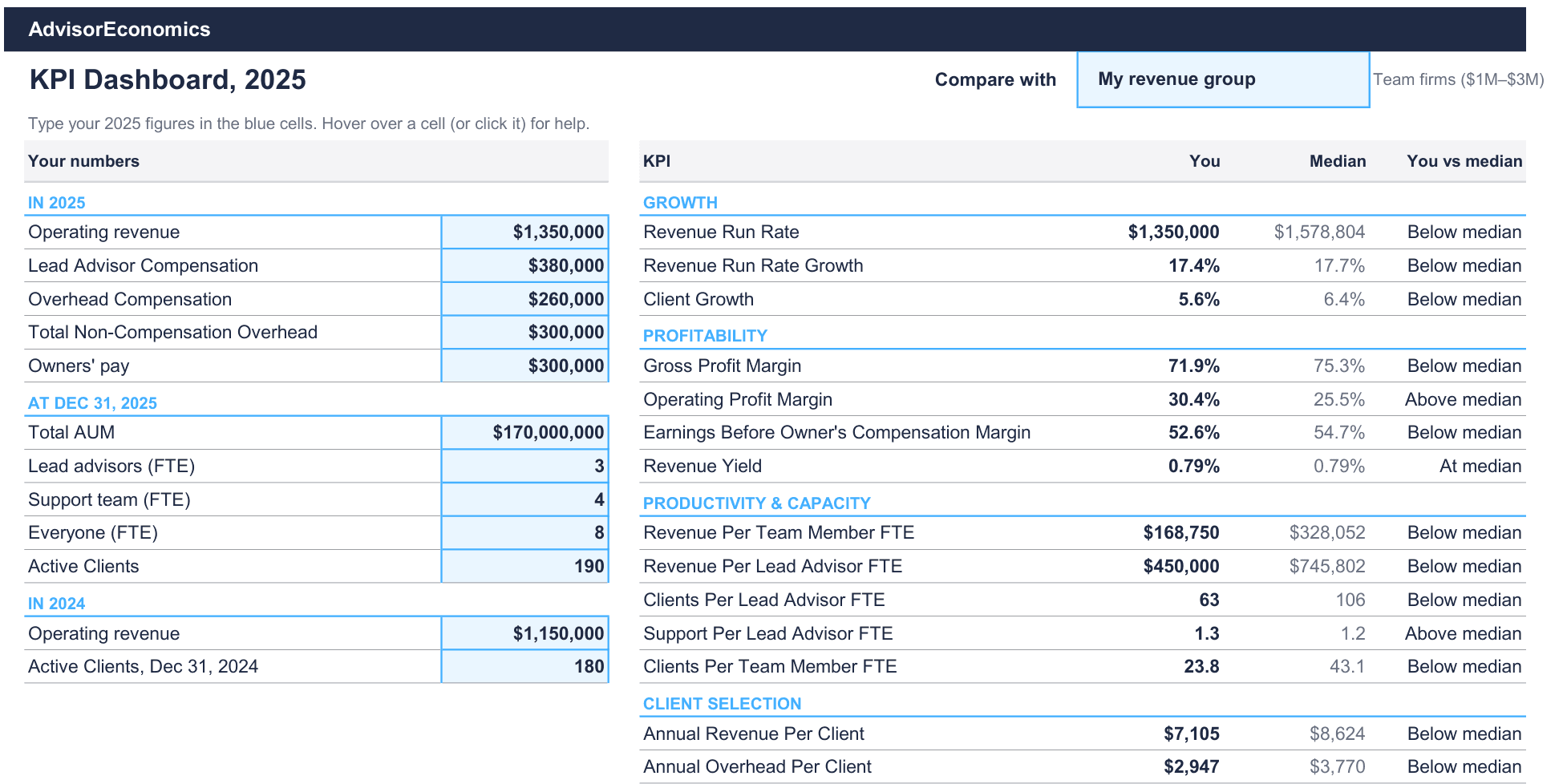
This measures the number of client relationships managed by a single lead advisor. It functions as a capacity metric, indicating whether an advisor is over- or under-extended.
If your number is low
Has Capacity
Fewer clients per advisor than peers can mean three things, and revenue per client tells them apart. If revenue per client is high, you're running a high-touch model for larger clients and the low count is by design. If it is moderate, you're giving high-touch service without charging for it: raise fees. If neither applies, your advisors simply have room to take on more clients.
If your number is high
Service Risk
A high count means one of three things: great efficiency, overworked advisors, or clients who get too few touchpoints and start to leave. Excessive clients per advisor often forces a reactive service model, where proactive planning is replaced by 'putting out fires'. This can lead to client retention issues or burnout unless the clients are segmented into a lower-service tier.
Revenue Ceiling
Once an advisor hits this capacity ceiling, revenue growth stalls. The paths to growth are to raise fees, replace small clients with larger ones, add support staff so each advisor can carry more, or hire another advisor.
Further reading
See your firm's Clients Per Lead Advisor FTE, benchmarked against firms like yours.