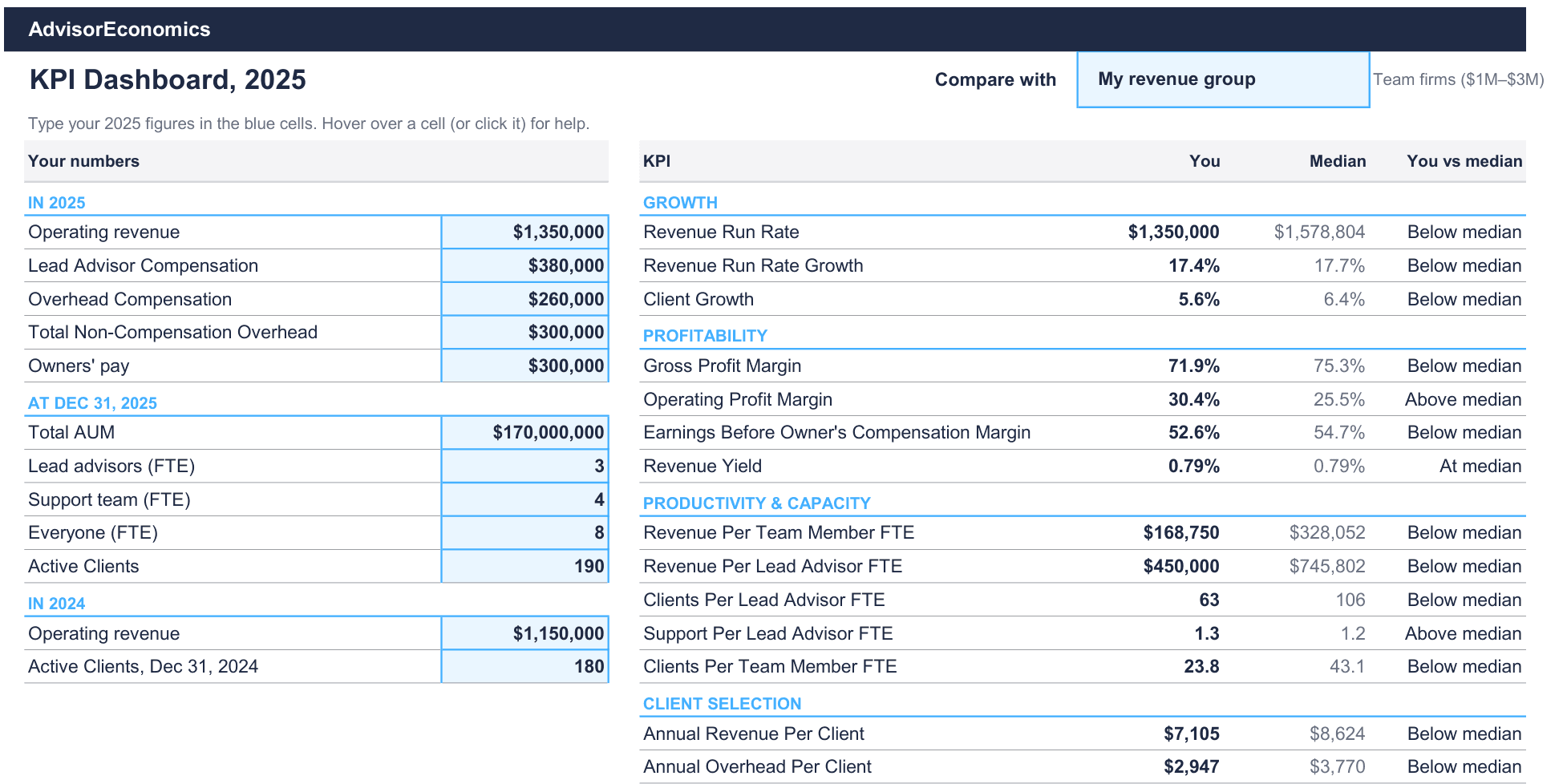
How fast your operating revenue is growing. In a year view, it compares this year with last year; a partial year is scaled to a full year first. In a quarter view, it compares the quarter with the one before it. Growth is what funds reinvestment, opens career paths that keep good people, and builds the value a buyer or successor will pay for.
If your number is low
Declining Run Rate
A negative or low run rate change may indicate client attrition, market headwinds, or fee compression. A big drop most often means an advisor left and took clients with them. Consider whether this is a temporary dip or a structural issue requiring attention.
Falling Behind Rising Costs
Rent, technology, salaries and compliance costs rise every year. Without revenue growth, margins shrink, your best people leave for firms where they can advance, and the firm is worth less to a buyer or successor.
If your number is high
Strong Growth
Above-average run rate growth points to strong client acquisition, rising markets, or successful fee increases. Ensure your infrastructure can support continued expansion.
Growing Pains
Fast growth spends cash on staff, technology and space before the new revenue arrives, and processes that worked at your old size start to break. Plan hires and cash ahead of the growth, not after it.
Further reading
- The Real Reason Most Financial Planning Firms Have No Career Track
- The Five Stages Of Growth In A Financial Planning Firm
- The New Capacity Crossroads: How Technology Is Changing The Timing Of An Advisory Firm's First Hire(s)
- Are Profit Margins For Financial Advisors Too Generous, Or Are AUM Firms Actually Not Profitable Enough To Survive The Next Bear Market?
- The Remarkable Liquidity Of Financial Advisory Firms When Planning Your Own Advisor Retirement
See your firm's Revenue Run Rate Growth, benchmarked against firms like yours.