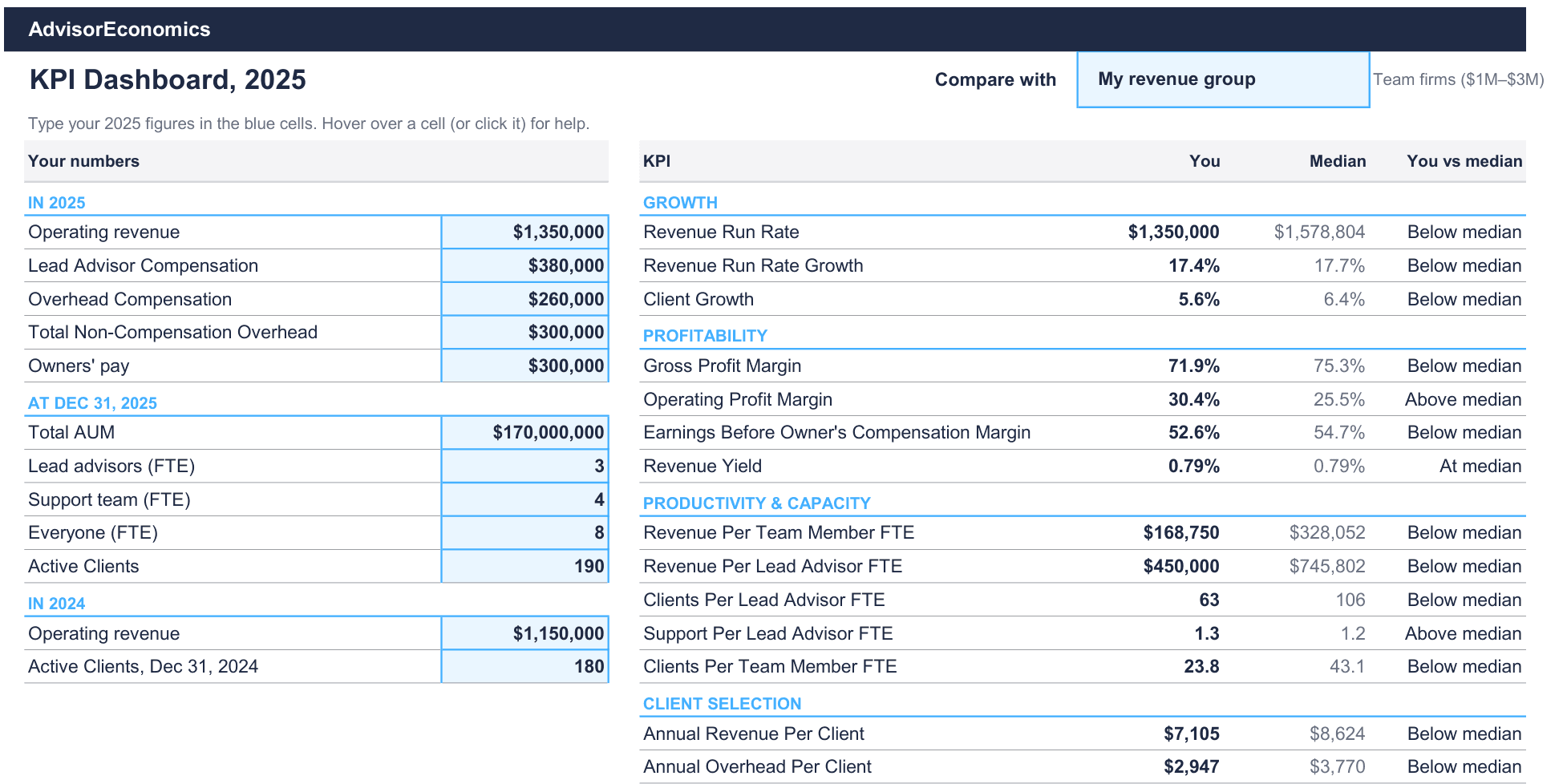
Operating Revenue Per Advisor measures the average amount of revenue managed by each advisor in your firm. Use this metric to right-size your service model to the fees you charge, or your fees to the service you deliver. If this is a partial year, it's scaled to a full year.
If your number is low
Over-Serving
Your advisors may be reaching capacity at lower revenue levels than peers. This could indicate over-serving—delivering more value than your fees capture. Either do less for the fees you charge, or raise fees for what you already do.
Too Many Small Clients
They get the same service as everyone else without paying the same fees, which pulls revenue per advisor down. Segment clients so service matches the fee, or set a minimum fee that at least covers your cost per client.
Too Little Support
If support per advisor is low, hiring support staff is often the fix, even though it feels backwards when margins are thin. The advisor gets their hours back, carries more clients, and revenue per advisor climbs.
Has Capacity
Your advisors may not have filled their books yet, for example a recent hire or a young practice still growing. Revenue per advisor should rise as they take on clients.
If your number is high
Highly Productive
Your advisors are highly productive, managing more revenue than the typical advisor. This indicates efficient client service, but ensure quality isn't being sacrificed for volume.
Burnout and Retention Risk
Advisors carrying far more revenue than their peers may be stretched thin.
Further reading
See your firm's Revenue Per Lead Advisor FTE, benchmarked against firms like yours.