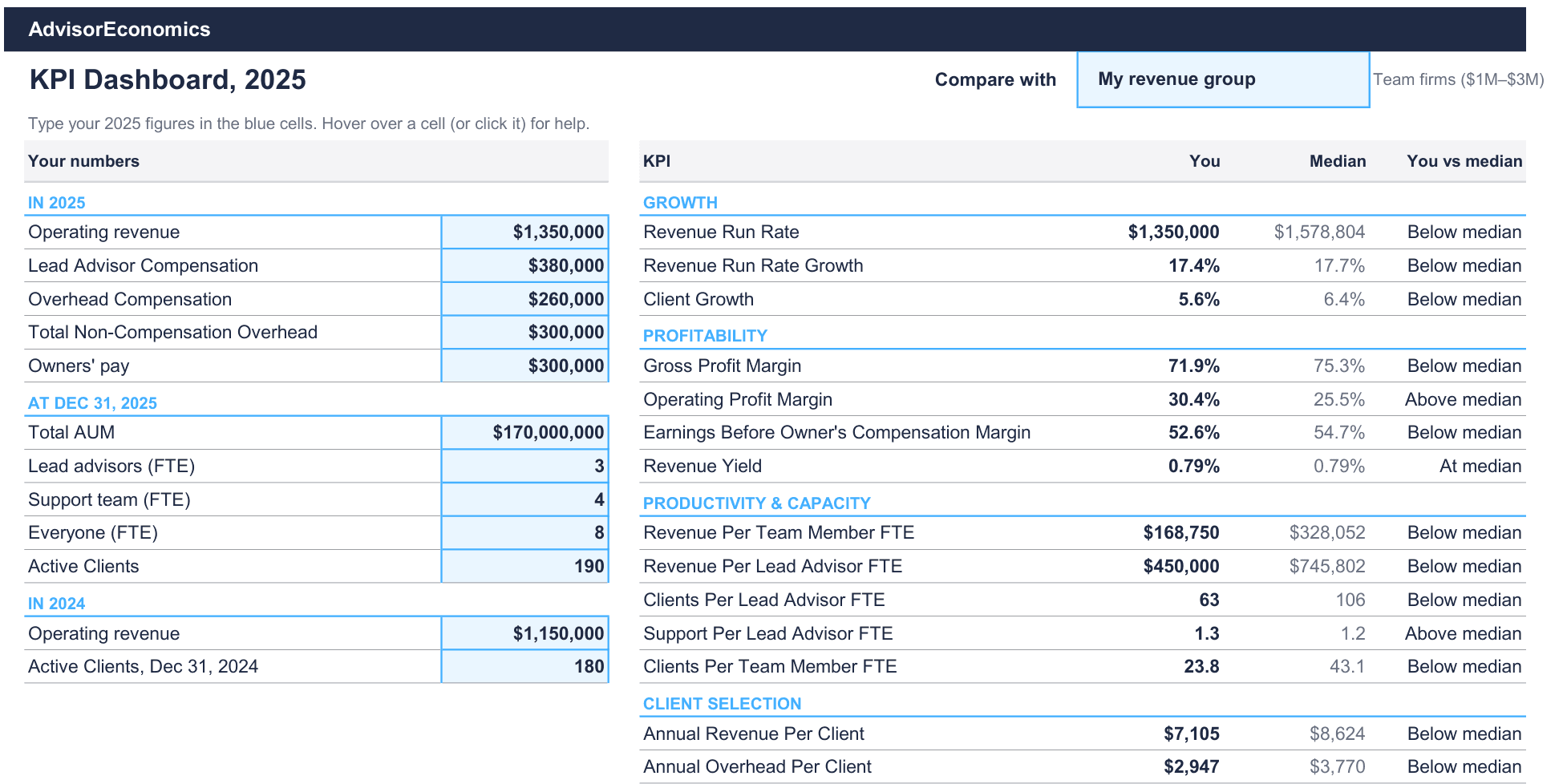
Gross profit as a percentage of operating revenue: what is left of each revenue dollar after direct expenses. It shows how much your advisory work leaves to cover overhead and profit, and it reflects five things you control: pricing, advisor productivity, advisor payout, client mix, and the mix of services you offer.
If your number is low
Advisors Not Yet at Capacity
Advisor pay is largely fixed, so an advisor who hasn't filled their book yet (a recent hire, or a young practice) drags this margin down until revenue catches up. If the book is growing, the margin should rise on its own.
Direct-Cost Drag
Where advisors are already full, a low margin usually traces to underpricing (heavy discounting, free planning), a payout structure that's too rich, too many small or off-target clients using advisor capacity, or one-off favours like managing a client's 401(k) plan.
If your number is high
Real Pricing Power
A high margin usually reflects genuine strength: enforced minimums, pricing that isn't discounted away, and advisors carrying a full, well-matched client load.
Stretched Advisors
It can also mean advisors are carrying more clients or revenue than their pay reflects. Watch for service gaps and retention risk among your advisors. Growth tends to slow too: at best the firm can't absorb many new clients, and at worst advisors quietly stop pursuing them because they know they couldn't serve them.
Further reading
- How To Set Your Financial Planning Fees Based On Advisor Cost, Value, And Affordability
- Revenue Productivity Ratios: The 3 Most Important Numbers To Manage In An Advisory Firm
- Converting Ensemble Partner Compensation From Revenue-Based To Advisor Salary
- Graduating Clients The Right Way
- Building A (Modern) Client Service System Model To Deliver Value More Efficiently, Profitably, And Enjoyably
See your firm's Gross Profit Margin, benchmarked against firms like yours.